
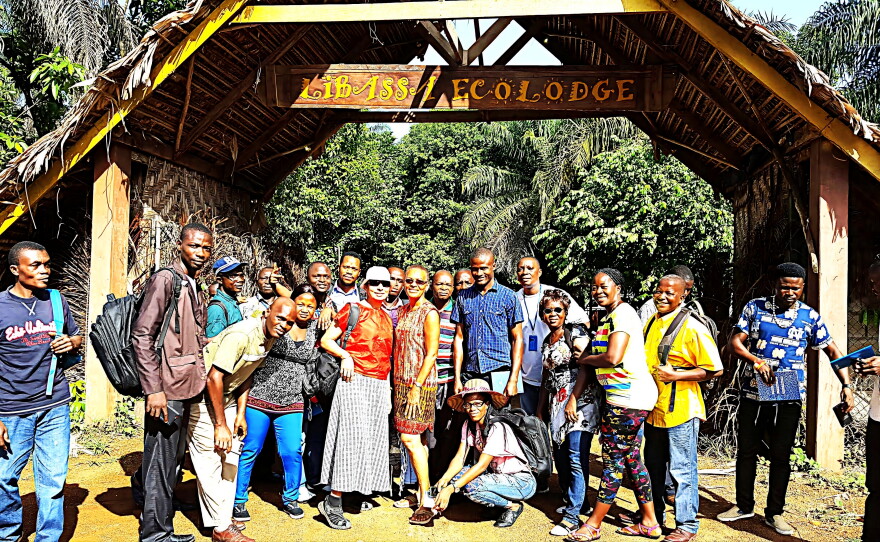
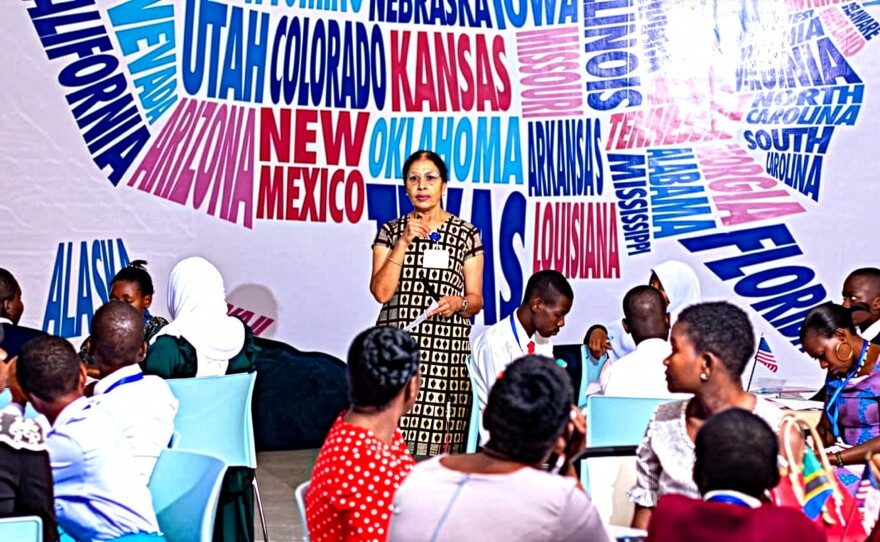
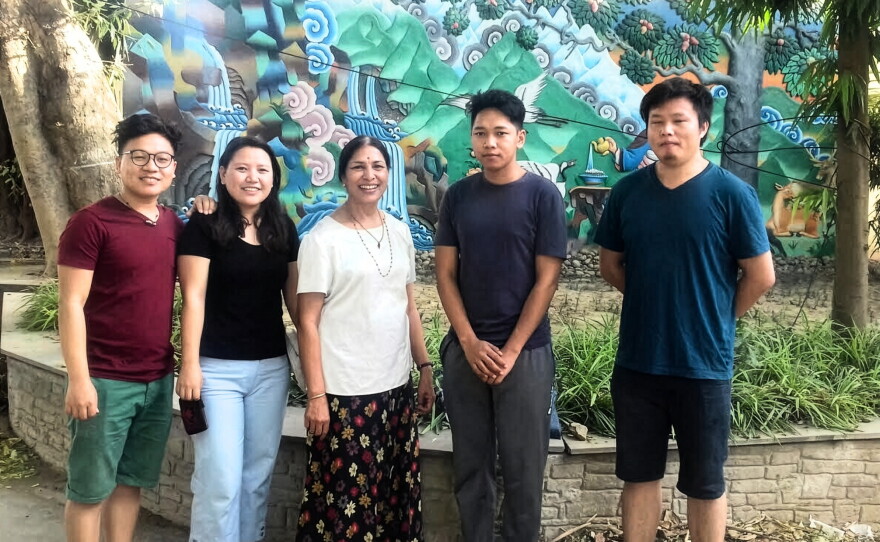
A new memoir by Wichita author Lakshmi Kambampati chronicles her journey as an immigrant, educator and traveler. In it she explores lessons about embracing change and moving forward. Beth Golay sat down with Kambampati to talk about the project and what she learned along the way.
Beth Golay: The subtitle of your book is a memoir of teaching and learning. What inspired you to write Uncharted Paths?
Lakshmi Kambampati: Over the years, I had many meaningful experiences while crossing continents as a teacher, traveler, and volunteer. The people I encountered in the community. that welcomed me, taught me valuable lessons about courage, cultural understanding, and human connections. I wanted to preserve those stories and share them with others.
So you document so many travels: India, Tanzania, Peru, Canada, Liberia, Moscow. I understand that your journals developed into this memoir.

Yes, I kept them as events, or just to for my own sake. But later on, when I looked at those and I read them. I saw that there was a connecting theme, so I developed those connecting themes into one streamlined story, and that became the "Uncharted Paths."
You are a Fulbright scholar, a Peace Corps volunteer. You speak four languages. You've taught students for many years, and you've taught teachers. It's difficult to believe that you got a zero in math. How did that zero set you on this path?
That's that's interesting story because I did not have a math foundation when I was growing up, so I never really comprehend what math was, was numbers were, and I just kept on going. So when I came to the eighth grade, the math naturally became little tougher, the word problems and all that, and absolutely I had no comprehension. So in the exam, I just could not do anything, and I got a perfect zero. My dad thought, "Oh, there must have been some mistake in grading, and he went and asked for the papers to see, and he found out yes, there was no mistake; it was a zero. And later on, when I become an adult, I started rethinking. I said, "What was wrong with me that I received that zero? Why couldn't I do math? So I enrolled myself in college with a very very basic level, and I built myself up. And then slowly, I got certified to teach high school math.
Very nice. So this memoir it requires looking at your own life as a story, and as we read, it it does not follow a linear pattern. It jumps from story to story, from year to year, forward and backward at different locations. Was there one chapter or memory that was difficult to write?
Yes. When I reflect back, when I was starting as a teacher, I looked myself and I said, "Hmm. Sometimes I could not manage my classroom, and I thought I was not capable. I doubted myself. Then I thought that maybe I may not be a good teacher, but slowly I built up, and I started looking at my thing. And now I'm looking back, and I said that those experiences have really helped me to become good teacher in my definition, and I could later on be successful and going to abroad and teach other people.
Years ago, I interviewed a woman named Sarah Stewart Smith about her book *The Well-Gardened Mind* in part of which she explored gardening programs in prisons, and I seem to watch on repeat the documentary *The Quilters* which follows a group of men in a maximum security prison in Missouri, and they spend seven hours a day designing and sewing birthday quilts for foster children. And I'm also fascinated with arts capacity right here in Kansas, which organizes classical recitals in prisons. So your essay "Stitches of Strength" really made me sit up and take notice because I seemed to be fascinated with this. I know it wasn't prison, but it was a juvenile detention center. Talk to me about what you did to work with those young people.

Yes, it was fascinating story. Those young children-I will call them children because the ages ranged from seven to 18, and they were moved from this facility to another facility, and I can say that they moved to more than four or five states. And all 24 hours they were in the locking system. Since they could not go to school because of their violent behavior. As a teacher, I went to their premises, and I was teaching all the subjects, and it was online subjects because they were all in different levels and different subjects. So the whole school time that they came, they were on the computer. They did not have any electives. They did not have any sports. They were just sat down, and people were just watching them like hawks. And naturally, they could not concentrate all the time. So that in turn became little violent experiences for them because they rebelled. Then I thought that they need some kind of relaxation. So I took some knitting needles, yarn, and crochet needles, and I started doing. I was warned from my colleagues that what are you doing because those are the weapons for them, but I persisted. In the beginning, they just looked at me and they thought it was a joke, but slowly they showed interest. There are one or two people who knew already little crochet, so when they were doing it, the other people got inspired. I want to learn, and they started doing. It was amazing how it got contagious. People started learning, and one particular young girl who was almost we can say 19 years old never was successful in anything. Her reading level was maybe fourth grade. Her math level was very low, and naturally she rebels when we ask her to do something academically. So then she said, "I want to learn." And she learned crochet. She made a baby blanket. That was the first thing she made, and she was successful in her life. She learned something-a lifelong skill. She was so proud, and she wanted to take the needles to her dormitory in the end of the day, but it was not allowed. But slowly, that became a bait for me. I said, "Okay, if you want to crochet, you have to do little bit of work in math or in reading." So slowly, it was since she was so much interested in doing that crochet, she will do the work. Slowly, she gained something. So that's a real success story. Who do you hope will read this book? I feel that the book is good for all ages, from young people to seniors, to newcomers to the country, to teachers, travelers, and anybody who feels lost in their life, it's a begin again thing. So the book resonates with start again is never too late.

And do you have a hope for what readers will take away from this book?
I hope that readers will take away a sense of courage, endurance, and openness to new experiences. Life does not always follow the path we plan, but unexpected changes can help us grow and discover meaningful opportunities. Most of all, I hope the book encourages readers of all ages to believe in themselves and keep moving forward.
Well, the book is Uncharted Paths: A Memoir of Teaching and Learning, Lakshmi Kamampati. Thank you so much for joining us today.
Thank you, Beth, for having me.
There’s a book launch for “Uncharted Paths” at 6 o’clock tonight at Watermark Books & Cafe. You can find more of Beth’s conversation with Lakshmi Kambampati at K-M-U-W.org.
